
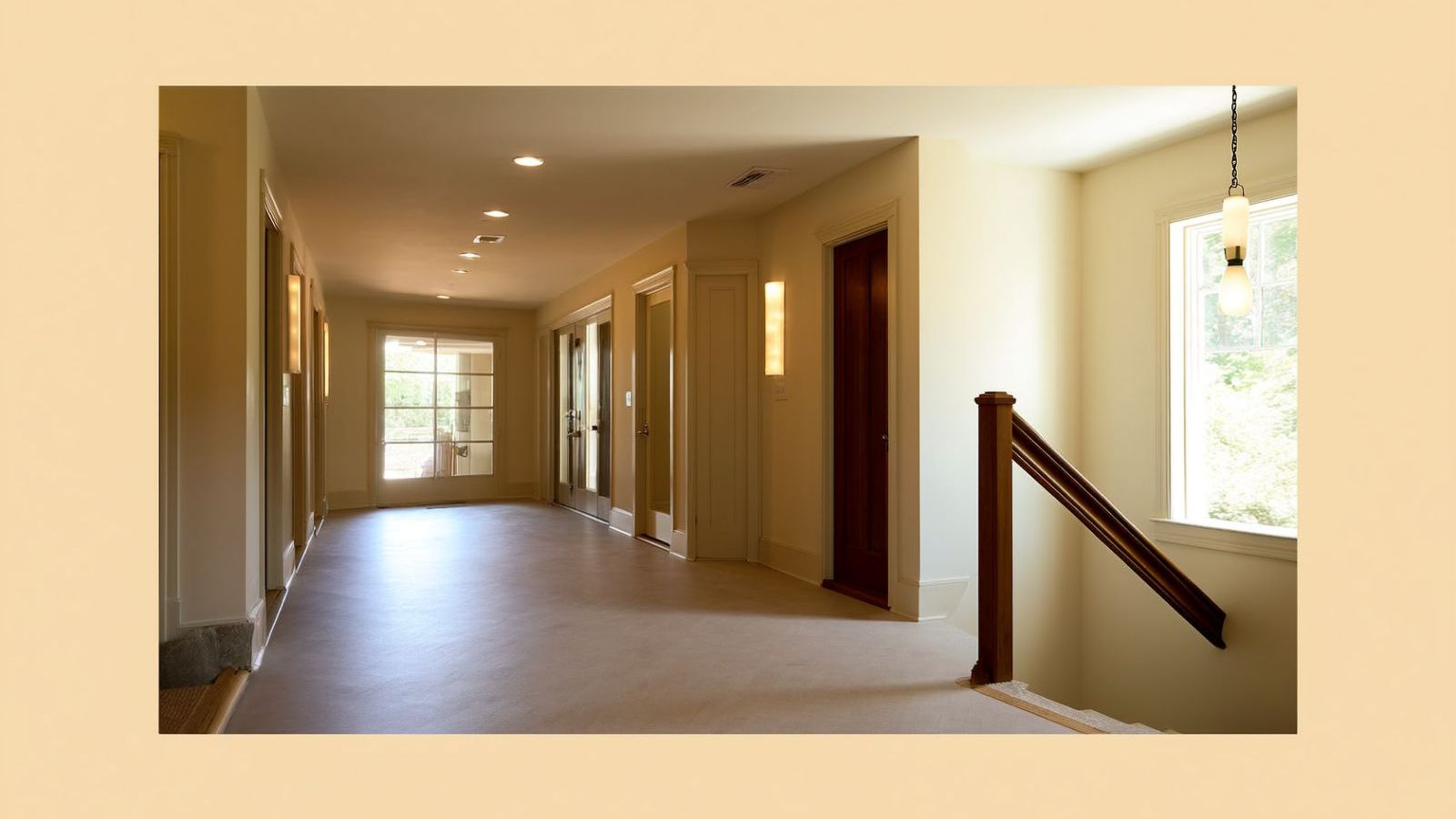
Walk the house in this order: bedroom to bathroom (the night route), stairs, kitchen, entries. Most of the fixes on this board cost under $100 or an afternoon. The expensive ones are the ones that change the structure: stair handrails, flooring and showers. Print the board, bring a pen and tick what you see.
Why bother: the CDC reports that more than 1 in 4 older adults fall each year, and a single fall roughly doubles the chance of falling again. About 4.5 million emergency department visits a year are due to falls, and about 1.4 million of those patients are hospitalized (CDC, read 2026-11-03).
What this board is based on
It is built from public cost data and general fall-prevention practice. We did not inspect any home, and nobody here has tested these products. We could not open a readable copy of the CDC's "Check for Safety" checklist, so the hazards below are common ones, not a reproduction of that document. Costs come from one source, Fixr's aging-in-place page, which was last updated on 2022-08-17 (Fixr, read 2026-11-03). Prices have moved since, so treat them as a floor and get local quotes. Where no source gave a price, the board says "not sourced" instead of guessing.
"DIY" means a competent adult with basic tools. "Pro" means a licensed contractor or electrician, mainly because the work involves structure, wiring or water.
Bedroom and the night route
| Hazard | Fix | Who | Cost |
|---|---|---|---|
| Dark path from bed to bathroom | Night-lights or motion-sensor lights along the route | DIY (plug-in) or Pro (hardwired sensor) | Sensor light installation $350-500 (Fixr); plug-in lights not sourced |
| Lamp switch out of reach from bed | Move a lamp within reach of the bed, or add a touch lamp | DIY | Not sourced |
| Loose rugs, cords across the floor | Remove rugs or tack them down; reroute cords | DIY | Not sourced |
| Bed too high or too low to stand up from safely | Check that feet rest flat on the floor when seated on the edge | DIY | Not sourced |
Bathroom
| Hazard | Fix | Who | Cost |
|---|---|---|---|
| Nothing to hold when stepping in or out of the tub | Grab bars anchored into wall framing (a towel bar is not a grab bar) | Pro, unless you can find studs and anchor reliably | $90-300 per bar (Fixr) |
| Toilet low enough that standing up is a struggle | Comfort-height toilet or a seat riser | Pro for a new toilet; DIY for a riser | Comfort-height toilet $100-1,600 (Fixr); riser not sourced |
| Wet, slick tub or shower floor | Non-slip mat or strips now; non-slip flooring if remodeling | DIY (mat) or Pro (flooring) | Bathroom non-slip flooring $4,500-8,000 (Fixr) |
| Tub or shower with a high step-over | Curbless shower, the big project | Pro | $2,500-9,000 (Fixr, listed as curbless shower) |
| Dim bathroom light | Brighter fixture or bulbs | DIY for bulbs, Pro for a new fixture | Bathroom lighting $20-100 (Fixr) |
A curbless shower is the biggest bathroom project on this board, so compare its price with the other options on your list before committing.
Stairs and steps
| Hazard | Fix | Who | Cost |
|---|---|---|---|
| Rail on one side only, or a rail that stops before the last step | Rails on both sides running the full length of the stairs | Pro | Indoor stair handrails $800-1,200; outdoor steps $700-1,200 (Fixr) |
| Steps that blend together in poor light | Contrasting strip on each step's edge, brighter lighting at top and bottom | DIY | Not sourced |
| Clutter parked on the stairs "for the next trip" | A basket at each end, and a household rule | DIY | Free |
| Loose carpet or worn treads | Re-tack or replace | DIY or Pro | Not sourced |
Kitchen
| Hazard | Fix | Who | Cost |
|---|---|---|---|
| Daily items on high shelves that need a stool | Move them to waist-to-shoulder height | DIY | Free |
| Slick floor, especially near the sink | Non-slip mat, wipe spills at once; non-slip flooring if replacing | DIY (mat) or Pro (flooring) | Kitchen non-slip flooring $6,400-11,000 (Fixr) |
| Poor task lighting | Under-cabinet lights or brighter bulbs | DIY | Not sourced |
Entries and outside
| Hazard | Fix | Who | Cost |
|---|---|---|---|
| Steps at the front door, no rail | Handrail on outdoor steps | Pro | $700-1,200 (Fixr) |
| Steep or no ramp where one is needed | Ramp built to a 1:12 slope (one inch of rise per twelve inches of run) | Pro | Not sourced |
| Dark porch | Motion-sensor porch light | Pro if hardwired | Sensor light installation $350-500 (Fixr) |
| Hallway or doorway too narrow for a walker | Widen the door or hallway | Pro | Door widening $300-2,500; hallway widening without structural changes $800-1,400 (Fixr) |
The ramp slope comes from the Access Board's guide to ADA ramps (Access Board, read 2026-11-03). The ADA rules cover public buildings, but 1:12 is a sensible target for a home too.
What to do first
Start with what is cheap and fast: lights on the night route, loose rugs, clutter, items out of reach. Then the two items with the highest consequence: grab bars at the tub and toilet, and full-length rails on both sides of the stairs. Flooring, curbless showers and widened doors come last, because they cost thousands and are best planned with quotes in hand.
Paying for it
Some home modifications can count as medical expenses on your taxes. IRS Publication 502 lists items such as ramps, wider doorways, grab bars and handrails among improvements that do not add value to the home, with the 7.5% of adjusted gross income floor and itemizing on Schedule A (IRS Pub 502, read 2026-11-03). Check with a tax professional for your situation.
Limits of this board
This is general information. It does not replace a home assessment by an occupational therapist, and it cannot tell you whether a specific person's balance, vision or medication is the real risk. If someone has already fallen, tell their doctor; the CDC notes that fewer than half of older adults who fall tell their doctor.